All Categories
Featured
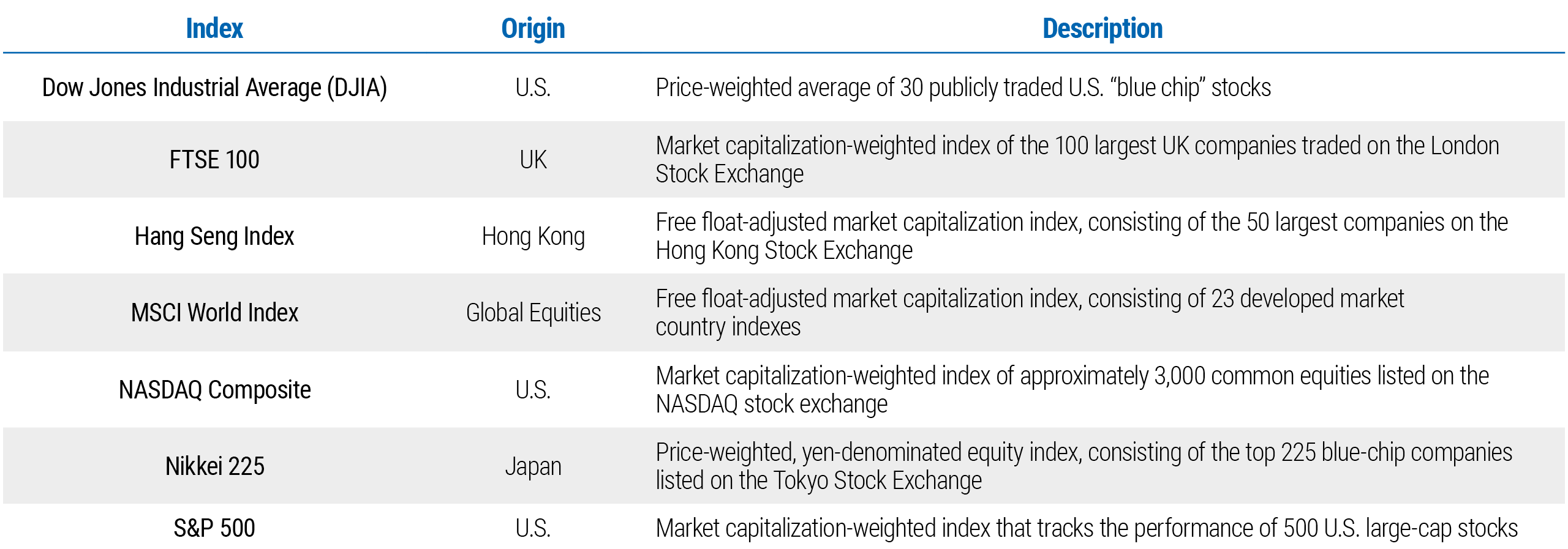

Evaluating Industry Efficiency Standards
Table of Contents
You've recognized that your main rivals use feature-rich platforms, however with high knowing curves and enterprise-level rates. If your item is user-friendly, fast to onboard, and significantly more budget-friendly, this becomes your core positioning. By highlighting simplicity and availability in your messagingwhile keeping the best cost pointyou take area in the market that others have overlooked.
It's a continuous procedure that feeds directly into item innovation, prices method, consumer experience, and brand interactions. As strategist Jay Abraham observed, "Your rivals can teach you whatever you need to learn about your own clients." By examining both your position and theirs, you build a clearer, more actionable roadmap for sustainable development.
It's a fitting tip that research study is just as important as the decisions it forms. After determining your rivals and assessing your position in the market, the next action is to develop a clear, actionable roadmap that moves your brand name forward. An effective competitive analysis method doesn't end with observationit culminates in execution.
If your analysis exposes a pricing space that puts you at a drawback, this might become your very first point of correction. If a new audience segment reveals signs of high capacity, you may choose to move messaging or introduce a targeted campaign to reach them directly. Next, translate those priorities into measurable goals.
Defining Market Expansion Objectives
Instead, specify what success looks like. This might imply raising brand awareness by improving your share of voice on social media, increasing item trial rates by 20% over the next quarter, or enhancing your consumer complete satisfaction rating by 2 points on a validated ranking system. Assigning responsibility is similarly important.
[target2:anchor_exact1]Does the marketing team requirement to refresh placing throughout all digital channels? Is item development in charge of building out new functions that satisfy unmet customer requirements? Set timelines and budget plan allocations so expectations are clear and progress can be tracked. While dexterity is essential, your strategy also requires consistency.
This assists you keep focus while staying responsive to altering dynamics in the market. It anticipates what's next, drawing from trends uncovered during competitive market research study.
Turning competitive intelligence into impact requires preparation, ownership, and a bias for execution. The insights you have actually collected need to not stay in decks and dashboardsthey ought to show up in your messaging, your pricing, your product roadmap, and eventually, your market efficiency. A one-time competitor evaluation is no longer enough. Markets shift quickly, new entrants emerge with disruptive models, and consumer expectations continue to progress.
Companies that treat it as an ongoing process are better placed to prepare for modification, area market spaces early, and react with dexterity. Tracking your rivals frequently enables you to find patterns across their prices strategies, product developments, and go-to-market messaging. Keeping an eye on these changes helps your group avoid surpriseswhether that's a sudden cost drop, an item feature leap, or a new project that shifts customer belief.
Standardizing Industry Performance Standards
Frequent rival analysis also discovers opportunities to lead. To make competitive research sustainable, services ought to build a tracking system into their operations.
[target2:anchor_exact1]Several toolslike SEMrush, Similarweb, and Grow Socialcan help automate parts of the process, however the insights still require to be interpreted through your business's strategic lens. For business operating in fast-evolving sectors like tech, energy, or travel, the cadence of competitive evaluations may be monthly and even constant. For those in more steady sectors, a quarterly deep dive may be enough.
The expense of missed out on signals in a congested market can be steep. The battle between Airbnb and the worldwide hotel market offers one of the clearest illustrations of how competitive analysisor the absence of itcan shape market outcomes. When Airbnb released in 2008, it didn't appear like a danger. It positioned itself as a community-based travel platform offering budget friendly remain in local homes.
However by the mid-2010s, Airbnb had become a preferred option for countless tourists throughout the world. Hotels, many of which failed to acknowledge Airbnb's distinct value proposition early on, were slow to react. Let's break this down using a streamlined for each side. Lower expenses for travelers compared to numerous hotels.
Advanced Competitive Analysis Strategies
Flexible inventory without the capital cost of owning residential or commercial properties. Strong customization through user profiles, reviews, and suggestions. Worldwide scalability powered by a digital-first, mobile-native experience. Inconsistent visitor experiences across hosts. Ongoing battles with regional regulators over zoning, taxes, and permits. Limited facilities compared to full-service hotels. Brand name recognition and trust, especially for organization and luxury travelers.

Latest Posts

How Executive Consulting Drives Agency Scale
How Data-Driven Campaigns Improve ROI
Leveraging Proven Growth Models